
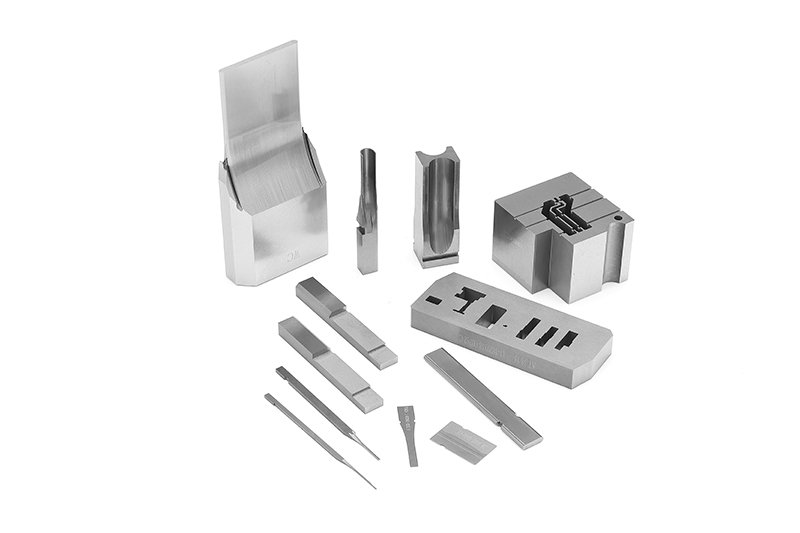
Plastic film parts · Precision mold insert
Board to Board, FPC, RF Mold Parts – Precision RF Connector Components Board to board, FPC,RF mold parts
Brand Xuxiang Mold
Availability Made to drawing
RFQ pricing
Quote from STEP / PDF & quantity
Engineered for high-frequency performance and mechanical stability, these precision board to board, FPC, RF mold parts provide a reliable interface in compact electronic designs. Each component is tooled for tight tolerances, ensuring consistent signal integrity and repeatable assembly in mass production. Their robust molded housings and optimized RF geometry help minimize loss, crosstalk, and interference in demanding environments. Ideal for OEMs, contract manufacturers, and RF design houses looking to streamline connector integration in modules, handhelds, and embedded systems.
(Board to board, FPC,RF mold parts)
- ISO 9001:2015–oriented process & documented inspection paths
- Zeiss / Nikon class metrology available for critical dimensions
- DFM feedback from 10+ senior tooling engineers
- Dongguan HQ + Quanzhou capacity for volume programs
Board to board, FPC,RF mold parts
High‑Precision Board to Board, FPC, RF Mold Parts for Advanced Electronics
These Board to Board, FPC, RF mold parts are specialized precision components designed for integrating RF and high-speed signals between printed circuit boards (PCBs) and flexible printed circuits (FPCs) in compact electronic equipment. They are typically used as the molded bodies, inserts, and interface parts within RF connectors or hybrid connector systems, supporting both rigid board-to-board and flexible board-to-FPC architectures.
By combining carefully engineered RF structures with dimensionally stable molded housings, these parts help designers achieve consistent impedance, low insertion loss, and robust mechanical retention. They are suitable for applications such as RF modules, wireless communication devices, automotive telematics, IoT gateways, industrial control units, and any product where size, performance, and reliability must be balanced.
Whether you are developing a new connector family or customizing an RF interface for your product line, these RF mold parts provide a foundation that supports repeatable manufacturing, optimized electrical performance, and long-term durability.
Key Features & Benefits
The design and construction of these parts reflect best practices in RF connector and FPC/board interconnect technology.
- Optimized RF geometry: Internal paths and contact locations are designed to support controlled impedance layouts, helping to reduce reflections and preserve signal integrity in RF and high-speed differential lines.
- Support for board-to-board and board-to-FPC: The molded structures are suited for connectors that bridge standard PCBs, flexible printed circuits, or a combination of both, enabling reliable interconnects in tight spaces and folded assemblies.
- Precision molded construction: High-accuracy tooling and stable molding materials help maintain critical dimensions, ensuring consistent mating, contact pressure, and alignment across production batches.
- Mechanical robustness: Features such as integrated reinforcement ribs, latch guides, and seating surfaces contribute to vibration resistance, shock tolerance, and long-term mechanical reliability when used with appropriate contact systems.
- Compact form factors: Designed for use in miniaturized connector systems, these parts help keep overall connector height and footprint low to support slim, portable, or densely populated assemblies.
- Compatibility with common RF and FPC connector concepts: Suitable for use in connector designs inspired by industry-standard board-to-board, board-to-FPC, and RF interface families, supporting a wide range of device architectures.
Specifications & Design Overview
Exact specifications of RF mold parts depend on the associated connector system and project requirements. The following table summarizes typical attribute categories and how they are usually defined for this type of component.
| Attribute | Description |
|---|---|
| Product type | Molded RF connector parts for board-to-board and board-to-FPC interconnects |
| Typical applications | RF modules, wireless devices, IoT nodes, automotive electronics, industrial control, embedded systems |
| Supported interconnect styles | Board-to-board, board-to-FPC (flex), hybrid RF + signal connectors |
| Mounting orientation | Depends on connector design; commonly parallel or right-angle between mated boards/FPCs |
| Material (mold body) | High-performance thermoplastic or similar insulating resin suitable for RF connectors |
| Flammability & environmental | Typically specified to meet relevant connector and electronics standards (exact rating defined per project) |
| Signal types | RF signals, high-speed differential pairs, low-voltage digital, and control lines depending on connector design |
| Mechanical features | Guide structures, latch support, seating surfaces, and reinforcement ribs for connector stability |
| Manufacturing process | Precision injection molding with project-specific tooling, followed by assembly into the full connector system |
| Customization options | Geometry, housing profile, keying, and mounting interfaces can often be tailored for OEM requirements |
Typical Use Cases & Who It Is For
Board to Board, FPC, RF mold parts are targeted at engineers and organizations that need reliable RF and high-speed interconnect solutions implemented in compact connectors. Some common use cases include:
- RF modules and wireless chipsets: Designing the mechanical and RF interface between a radio module and the main system board, while maintaining consistent impedance and shielding paths.
- Folded or flexible device layouts: Creating connectors that bridge between a rigid main board and an FPC that routes RF or high-speed signals around hinges, bends, or tight spaces.
- Automotive and transportation electronics: Supporting on-board communication, telematics, and antenna interfaces in environments where vibration, temperature variation, and long service life must all be considered.
- Industrial and IoT gateways: Implementing interchangeable RF or communication modules that plug into a baseboard using robust board-to-board connectors for easy servicing or upgrades.
- Consumer and handheld devices: Enabling slim, low-profile connectors for smartphones, tablets, wearables, and portable instrumentation where board space and height are at a premium.
These components are suited for:
- Connector manufacturers and tooling providers developing new RF connector families.
- OEMs collaborating on semi-custom or fully customized connector solutions.
- Hardware design teams seeking consistent, manufacturable RF interfaces.
- Contract manufacturers who need stable, repeatable connector assemblies for high-volume production.
Selection & Buying Guidance
Choosing the right RF mold parts for board-to-board or board-to-FPC connectors requires attention to both electrical and mechanical constraints. Consider the following points as you evaluate options or specify custom tooling:
- Electrical performance targets: Clarify the intended frequency range, data rate, and impedance requirements. This informs the geometry of RF features, spacing, and internal cavity design.
- Board stack-up and layout: Understand the PCB and FPC thicknesses, pad layouts, and stack-up so that the mold parts can support proper mating height, coplanarity, and routing clearances.
- Environmental and regulatory conditions: Identify ambient temperature range, potential exposure to vibration or shock, and any safety or compliance standards (such as automotive or industrial requirements) that could influence material selection.
- Mechanical constraints: Evaluate available footprint, connector height, and access for assembly tools. Mold geometry can be optimized to simplify pick-and-place, reflow, and final assembly.
- Serviceability: If modules need to be replaced or upgraded in the field, consider keying features, latch design, and robustness of the mating interface to withstand multiple insertion/extraction cycles.
- Production volume: For high-volume projects, customized tooling for RF mold parts can significantly reduce per-unit cost and improve yield. For smaller runs, semi-standard geometries may be preferable to limit tooling investment.
By working closely with your connector supplier or tooling partner, you can specify RF mold parts that align with your performance, schedule, and cost goals while ensuring reliable board-to-board or board-to-FPC connectivity throughout the product’s lifecycle.
FAQ
Are these RF mold parts compatible with my existing board-to-board connector design?
Compatibility depends on the geometry and interface details of your current connector system. In many cases, RF mold parts can be adapted or customized to match existing pin layouts, mating heights, and housing profiles, but a mechanical review and drawing comparison are recommended before committing to production.
Can these parts be used in both board-to-board and board-to-FPC configurations?
Yes, the mold parts are intended for use in connector designs that support rigid board-to-board, board-to-FPC, or hybrid configurations. The final suitability depends on the contact system and mechanical layout selected during connector design.
What information do I need to provide to get the right RF mold parts for my project?
You should prepare basic information such as target frequency range or data rate, intended connector orientation, board and FPC thickness, available footprint and height, and environmental conditions. Mechanical drawings or 3D models of your boards help ensure that the mold parts are dimensioned correctly.
How are these mold parts shipped and packaged?
Packaging is typically tailored for automated assembly and may include tape-and-reel, trays, or bulk packaging depending on the part design and order quantity. Protective packaging is used to prevent deformation of critical features during transport.
Do I need any special tools or processes to assemble connectors using these parts?
In most cases, standard SMT and through-hole assembly processes apply. For FPC interfaces, you may need fixtures or alignment tools to hold the flexible circuit during insertion. Detailed handling and assembly guidelines are usually provided with the connector design documentation.
What kind of maintenance is required for connectors that use these RF mold parts?
The mold parts themselves are passive structures within the connector and require no direct maintenance. For the assembled connector, periodic inspection, careful handling, and adherence to specified mating cycles are recommended to maintain reliable performance, especially in harsh environments.
What is the typical lead time and minimum order quantity?
Lead time and minimum order quantity depend on whether you are using an existing mold design or commissioning new tooling. Standard or semi-standard parts can often be supplied with shorter lead times, while custom tooling will add time for design, fabrication, and validation.
Is there any warranty or return policy for custom RF mold parts?
Warranty and returns for custom parts are generally governed by the supplier’s terms and the agreed technical specification. Most manufacturers warrant that parts will meet agreed drawings and material specifications, and any nonconforming items can be reviewed for replacement or credit according to contract terms.
Can these RF mold parts be redesigned if my PCB layout changes?
Yes, mold designs can usually be revised to reflect changes in PCB layout or new performance requirements, though significant modifications may require updated tooling and associated engineering time. Early communication about layout changes helps minimize cost and schedule impact.
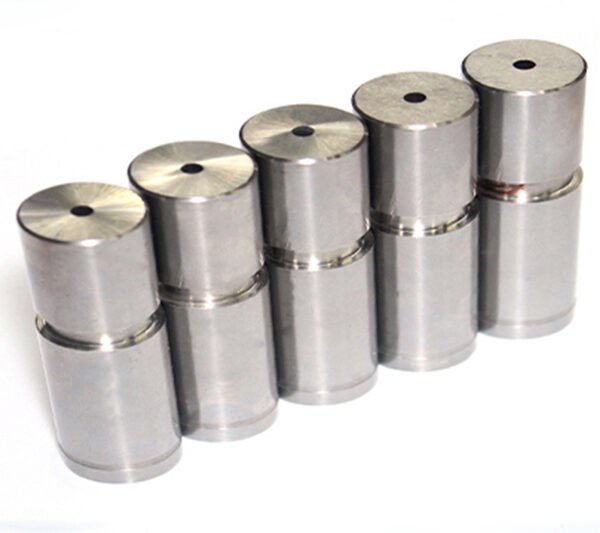
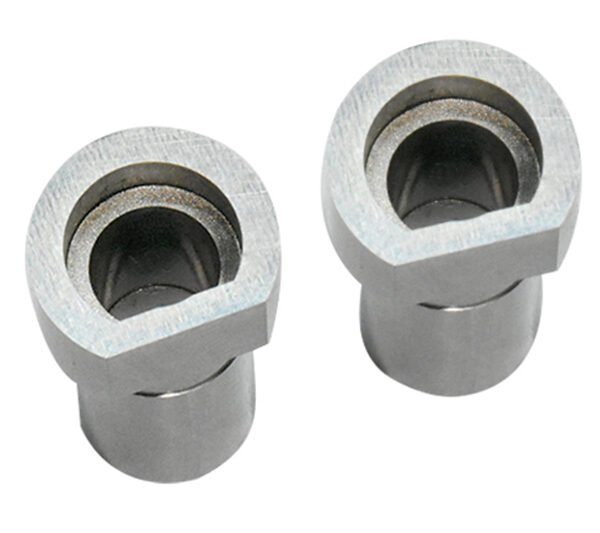
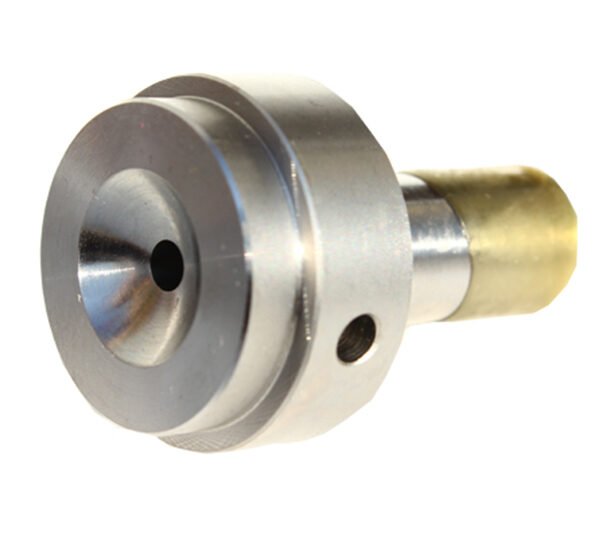
Same drawing, predictable results—next batch
Share revision, quantity ramp, and inspection level. We quote process route, ship date, and documentation in one structured response.