
Equipment center · Manufacturing capability
Precision Mold Manufacturing Equipment & Metrology
Dongguan Xu Xiang Precision Mold Co., Ltd. runs a deliberately tier-one machine park—Japanese and Swiss EDM and wire platforms, German CMM architecture, and optical metrology from global leaders—paired with high-productivity grinding and CNC. The objective is singular: deliver mold components, connector inserts, and EDM-finished cores that hold microns when your customer’s IQC turns the lights on.
Use the capacity matrix below as a live index: every row links to a deeper profile of that capability and how it strengthens your program. When you are ready, each section offers a direct path to our inquiry desk—no forms buried three clicks deep.
Capabilities indexed on this page: Dawn precision grinding (SGM450 fleet) · Fanuc and Beijing Jingdiao CNC · Sodick and Charmilles sinker EDM · Seibu and Sodick slow-wire EDM · Nikon optical projectors, tool microscopes, and digital height gauges · Rockwell hardness verification · ZEISS MICURA coordinate measuring — engineered for automotive, medical, and electronics supply chains that audit both process and evidence.
On narrow screens, scroll horizontally to view the full capacity matrix.
| Equipment | Model | Brand | Quantity | Accuracy | Group total |
|---|---|---|---|---|---|
| Grinding | SGM450 | Dawn | 20 | ±0.001 mm | 20 units |
| CNC machining center | D14MA | Fanuc | 3 | ±0.001 mm | 6 units |
| Carver400B | Beijing Jingdiao | 3 | ±0.002 mm | ||
| Sinker EDM | AD30Ls | Sodick | 6 | ±0.005 mm | 8 units |
| F330 | Charmilles | 2 | ±0.002 mm | ||
| Slow-wire EDM | M50B | Seibu | 1 | ±0.002 mm | 2 units |
| AQ400L | Sodick | 1 | ±0.002 mm | ||
| Optical projector | V-12B | Nikon | 3 | ±0.001 mm | 9 units |
| Tool microscope | MM-400 | Nikon | 1 | ±0.001 mm | |
| Height gauge | MF-501 | Nikon | 5 | ±0.001 mm | |
| Hardness tester | HR-150A | Rockwell | 1 | ±1° | |
| CMM | ZEISS MICURA | Zeiss | 1 | 0.0007 mm | 1 unit |
The 9 units cell groups optical projector, tool microscope, height gauge, and hardness verification as one metrology block. The link opens the projector profile first; use anchors above for each line item.
Precision Grinding — Dawn SGM450 Fleet (20 Units)
Down-grinding for inserts, cores, and connector-grade cavity geometry
Twenty Dawn SGM450-class machines are not a statistic for a brochure—they are scheduling leverage. We maintain ±0.001 mm-class discipline on flanks and radii that must mate cleanly with EDM and wire finishing, so thin-wall inserts and micro-pin lands release predictably under real production cadence.
Why this asset mix outclasses typical mold houses
Many shops run a handful of aged surface grinders and quietly outsource critical grind operations. Xuxiang inverted that model: a dedicated grinding fleet keeps contour control in-house, shortens the loop between heat treat, grind, and final burn, and removes the “mystery subcontractor” variable from your timeline.
Against competitors who still treat grinding as a bottleneck, our scale means parallel capacity for multi-cavity programs—your urgent connector tooling does not wait in a single-spindle queue while another customer’s job consumes the only capable machine on the floor.
- Fleet depth: twenty units versus the one-to-three grinder norm in small job shops—real redundancy, not rented capacity.
- Process integration: grind sequences authored with the same team that programs EDM—no handoff drift between silos.
- Cosmetic readiness: mirror-capable corners and premium connector aesthetics stay under our roof until you approve the surface story.
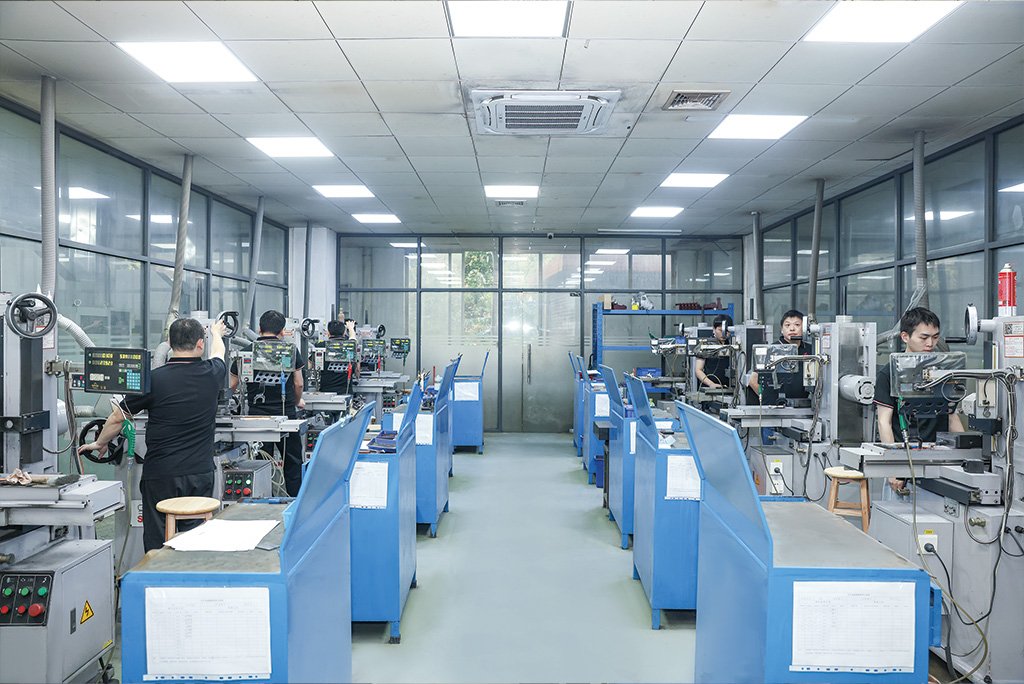
Typical work scope & customer-facing services (precision grinding)
- Precision surface and form grinding of mold plates, clamping blocks, slides, and reference datums used across assembly, wire, and inspection.
- Thickness, parallelism, and square-shoulder control on cavity blocks, core inserts, wedge inserts, and multi-cavity stacks (H13 / SKD61–class and comparable tool steels).
- Core pins, ejector pins, punch-style inserts, and round / rectangular components: OD grind, overall length, and transition control for connector, medical, and micro-molding tooling.
- Radii, lands, shutoff flanks, and mating faces prepared for sinker EDM and slow-wire with stock allowance tuned to your burn and wire strategies.
- Surface-finish refinement for release-sensitive or cosmetic bands where drawings reference SPI-style or customer-specific appearance requirements.
- Capacity-managed grind programs for parallel cavitation and insert families—what general shops batch to subcontractors stays on our floor with traceable scheduling.
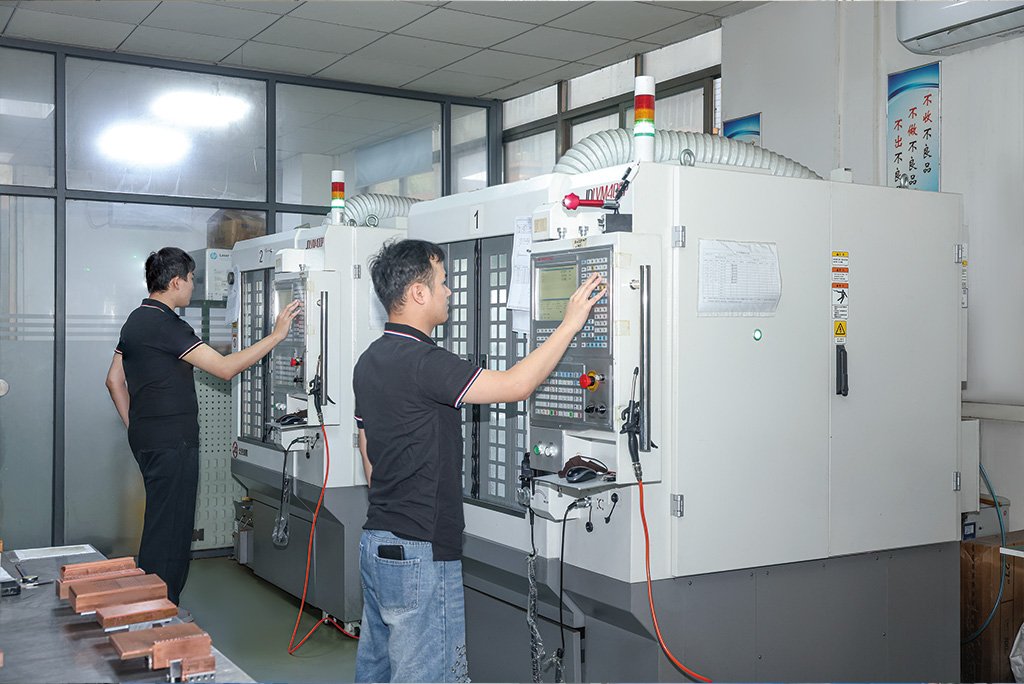
Typical work scope & customer-facing services (CNC machining centers)
- Roughing and semi-finishing of mold bases, cavity / core sets, slides, lifter shoes, gibs, and large plate work for automotive-scale and consumer-electronics tooling.
- Programming of water-line circuits, standard holes, pocket openings, rough windows, and clearance features that define assembly readiness before EDM and grind finish the story.
- Electrode fabrication—graphite and copper / copper-tungsten electrodes for sinker EDM, including fine ribs, micro-pockets, and connector-grade detail.
- Precision finishing of insert pockets, optical / micro-connector features, gate lands, and shutoff transitions where the CNC contour is the master geometry EDM will replicate.
- Preparation of alignment datums, clamping ledges, and reference surfaces that carry through grind, wire, burn, and CMM layouts.
- Engineering-change support: selective re-machining of plates and inserts while protecting the assembly clock and inspection continuity.
CNC Machining — Fanuc D14MA & Beijing Jingdiao Carver400B
High-volume roughing paired with electrode-grade finishing intelligence
Fanuc-class centers recover steel aggressively on large cores and plates; Beijing Jingdiao Carver400B cells hold the electrode and optical-insert detail that sinker EDM will copy faithfully. That dual-lane philosophy protects T0 dates without sneaking “good enough” geometry into your critical fits.
A generational step above generic machining-only suppliers
Contract machine shops optimize spindle hours; mold manufacturers optimize downstream replication. Our CNC investment follows the second rule—Carver-class machines are chosen specifically for graphite and steel electrodes, micro pockets, and optical connector lands where generic three-axis work would leave EDM chasing uneven stock or unstable spark gaps.
Compared with partners whose newest CNC asset is still a decade-old workhorse, we maintain platforms aligned with today’s electrode complexity and tight radii expectations—so your RFQ does not inherit hidden compromise before the first electrode ever lands in the sinker.
- Throughput lane: Fanuc fleet erases billet quickly—ideal for automotive-scale plates and multi-insert bases.
- Precision lane: Jingdiao architecture targets micron-scale electrode fidelity your burn strategy depends on.
- Single-owner accountability: CNC planning, EDM, and metrology live under one engineering roof—no finger-pointing across vendors.
Sinker EDM — Sodick AD30Ls & Charmilles F330
Eight machines of Japanese and Swiss lineage for burn-intensive programs
Six Sodick AD30Ls units plus Charmilles F330 capacity create genuine scheduling elasticity—parallel cavitation, long overnight burns, and contingency when a customer accelerates sampling. The mission is stable cavity replication: the moment where electronics and medical housings either pass gage or fail visibly under light.
Premium EDM brands—not a retrofit compromise
Buyers comparing mold suppliers on price alone often miss the equipment lineage hidden in the quote. Many low-cost houses rely on dated sinker technology with limited adaptive control and fragile corner strategies. Sodick and Charmilles architectures are chosen here because they defend predictable surface integrity, fine-flush programs, and mirror-capable finishes where steel and geometry cooperate.
Versus shops advertising “EDM available” on two legacy heads, our matrix means you inherit capacity margin: your program is not held hostage when another mold set monopolizes the only reliable sinker on the roster.
- Brand pedigree: Japanese Sodick discipline plus Swiss Charmilles heritage—materially different from generic import sinkers.
- Scale: eight dedicated units—plan parallel burns instead of serial desperation.
- Engineering pairing: electrodes originate on Jingdiao-class CNC, then burn under parameters tuned in-house—not guesswork passed to a broker.
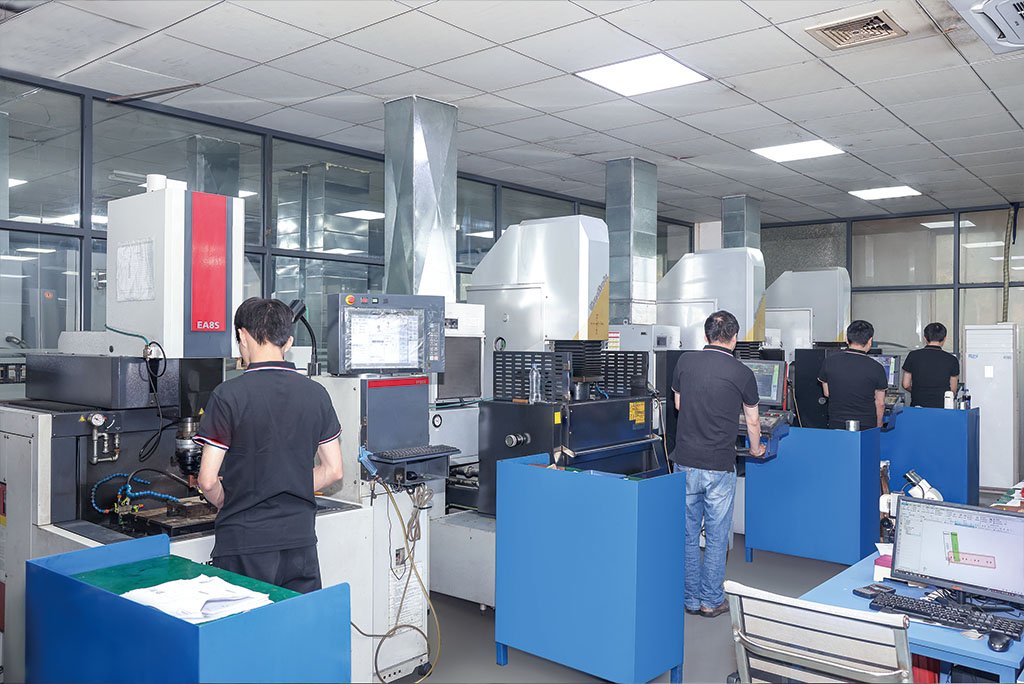
Typical work scope & customer-facing services (sinker / die-sinker EDM)
- Electrical-discharge forming of cavity and core details, deep ribs, pockets, and undercuts that cannot be finished economically by milling alone.
- Fine-detail burning for connector housings, B2B interconnect tooling, medical-device molds, automotive interior electronics, and aesthetic consumer parts.
- Shutoff definition, blade edges, thin-steel transitions, and fine corner radii governed by electrode design and on-machine strategy (geometry- and material-dependent).
- Surface finish refinement toward mirror-capable or texture-ready conditions where steel, flushing, and geometry cooperate with Sodick / Charmilles-class process control.
- Mold repair and selective cavity rework: burn-back after engineering changes, wear, or weld/blend preparation—without surrendering the entire tool to an outside broker.
- Parallel scheduling across multiple sinker heads for multi-cavity and urgent sampling programs.
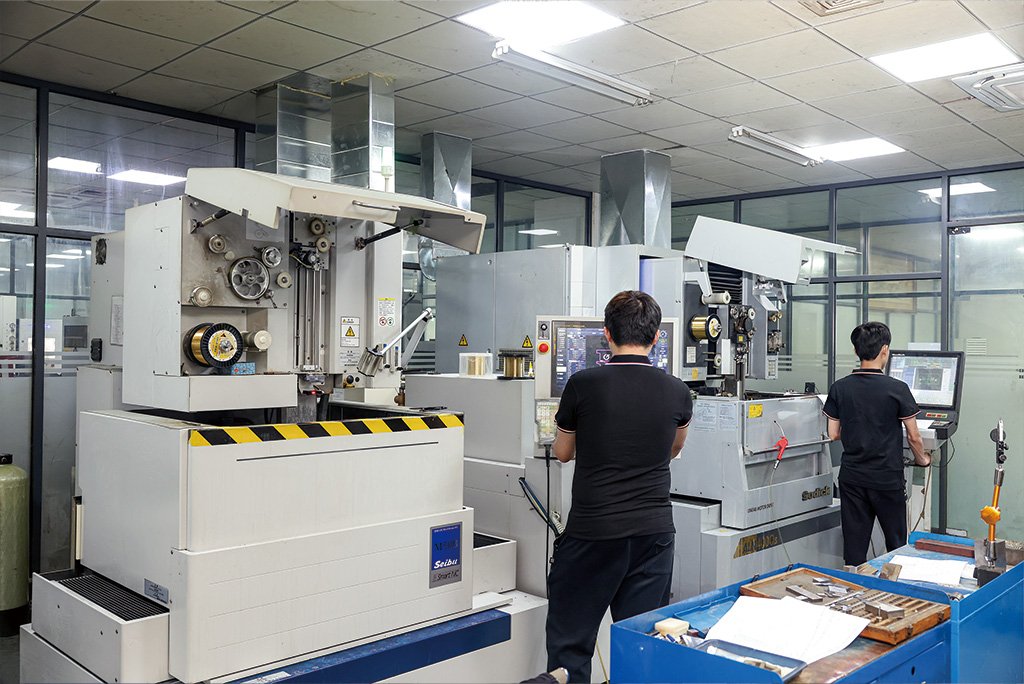
Typical work scope & customer-facing services (slow-wire EDM)
- Precision wire cutting of hardened punches, die inserts, cavity / core inserts, slide and cam forms, and punch plates—often after heat treat to minimize distortion versus pre-harden milling-only approaches.
- High-accuracy holes, slots, narrow lands, and internal forms where the drawing calls “wire finish as final” or assigns true-position / perpendicularity that slow-wire holds better than fast-wire economics.
- Support for metal-stamping and progressive-die precision blocks that Xuxiang supplies alongside injection-mold insert families (per your BOM scope).
- Taper and stack-sensitive profiles requiring stable straightness, roundness, and size control without selective hand fitting at your customer.
- Cutting in tool steels and selected hard / wear materials where non-contact EDM avoids crack-prone mechanical stress (final feasibility always part-specific).
- Routing discipline: wire clears 2D-dominant stock removal so sinker EDM hours concentrate on true 3D cavity replication.
Slow-Wire EDM — Seibu M50B & Sodick AQ400L
Western-Japan Seibu DNA plus Sodick execution for final-profile honesty
Slow-wire cells from Seibu and Sodick exist to settle arguments before your customer does: straightness, roundness, and two-micron-class positioning where inserts must slide or mate without selective gaging tricks. When your drawing calls “wire finish as final,” this is the lane that preserves taper integrity and micro-step edges.
Not all “wire EDM” claims are equal
Fast-wire equipment is abundant because it is inexpensive to operate; it is also the root cause of many IQC rejects when true position and cylindricity matter. Slow-wire platforms from established Japanese suppliers deliver measurably tighter process capability—the difference is not marketing, it is physics and control architecture.
If your current supplier patches profile issues with hand fit or secondary bench work, you are paying for their equipment deficit. Xuxiang positions slow-wire as a first-class finishing operation, not an afterthought rented from a broker down the street.
- Technology class: slow-wire versus fast-wire—fewer surprises on round holes, long lands, and precision punches.
- OEM brands: Seibu and Sodick—names your quality team will recognize in a facility audit narrative.
- Fit with sinker EDM: wire trims what sinker should not waste sparks on—intelligent routing saves calendar time and electrode cost.
Optical Projectors — Nikon V-12B (×3)
Tripled optical throughput for first-article and production surveillance
Three Nikon V-12B units multiply how quickly we clear layouts, FA cycles, and intelligent sampling without starving the CMM queue. Optical comparators remain the fastest honest lens on contour and position when you need evidence, not anecdotes.
Metrology volume that keeps pace with ambition
Suppliers who run one aging comparator force every urgent check into a queue—or worse, skip optical discipline and hope the CMM later forgives the lapse. Tripling V-12B capacity is a statement: we built QC bandwidth to match production ambition, not to decorate a lobby tour.
Stack that against mold shops that outsource inspection or borrow equipment sporadically; Xuxiang keeps traceability continuous from floor to lab so your auditors read one coherent story in the data package.
- Brand continuity: Nikon optics—recognized in medical and automotive supplier evaluations worldwide.
- Redundancy: three stations—coverage for parallel lots and sudden FA escalations.
- Bridge to CMM: optical curves correlate with ZEISS scanning—no isolated islands of truth.
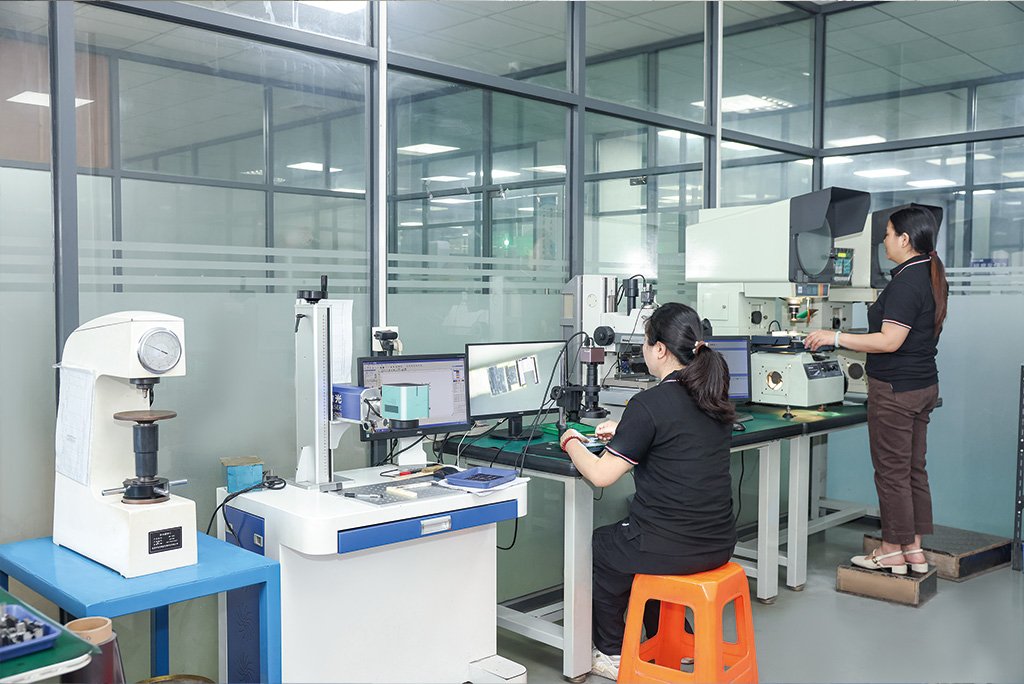
Typical work scope & customer-facing services (optical comparator / profile projector)
- Rapid 2D profile and silhouette verification of inserts, pins, blades, pads, and simple molded / stamped witness samples against engineered overlays and toleranced drawings.
- First-article inspection (FAI) layouts plus photographic or chart-style evidence suitable for internal release and many customer-facing packages.
- Production sampling (incoming, in-process, or final audit) sized to your AQL, skip-lot, or IQC rhythm as agreed in the PO.
- Strength in connector, B2B interconnect, micro-molding, and electronics-adjacent part families where magnified contour checks catch position drift before CMM queue time is spent.
- Support for attribute-heavy travelers: width, radius, angle, and position relationships that auditors expect to see proven on a comparator-class instrument.
- Deliberate optical → CMM escalation path so your quality story reads as one continuum, not conflicting islands of data.
Typical work scope & customer-facing services (toolmaker’s / measuring microscope)
- High-magnification review of edges, chamfers, micro-radii, step heights on small lands, and burn / grind witness lines that numeric printouts alone do not explain.
- Qualitative and measured support for connector pin tips, blade shutoffs, micro-gates, and thin steel flash traps—categories that drive field reliability.
- Defect diagnosis: chipping, burr return, uneven wear, and EDM overburn tells visible before rework or setup changes propagate.
- Photo documentation aligned to PPAP, FA remediation, or customer SCAR expectations when visual evidence must accompany dimensional reports.
- Cross-disciplinary correlation: microscope observations mapped to CMM true-position and form results so engineering agrees on root cause faster.
- Ideal when your drawing combines tight linear dimensions with aggressive micro-scale features that shop-floor travelers flag as “visual confirm.”
Toolmaker’s Microscope — Nikon MM-400
Micro-geometry truth for connector pins, lands, and EDM witness detail
The Nikon MM-400 resolves what spreadsheets cannot: the hairline land, the imperfect corner transition, the witness line that explains intermittent drag. Outputs here routinely cross-check CMM scans so true position and form on micro pins are defended with two independent sensing philosophies.
When your brand sells “high reliability,” evidence lives here
Competitors who rely on handheld scopes or skip micro-visual verification invite silent field failures. A dedicated toolmaker’s microscope tier signals that Xuxiang treats micro-feature discipline as a revenue-protecting system—not a discretionary add-on billed only when a customer complains.
OEM programs with PPAP-style expectations should expect photo-ready documentation and disciplined correlation paths—exactly the tone this instrument anchors inside our quality narrative.
- Dual validation: optical micro geometry plus CMM authority—stronger than either alone.
- Connector IQ: built for the geometry vocabulary of B2B interconnect and precision consumer electronics.
- Audit posture: equipment your customer’s QE can photograph and file without apology.
Digital Height Gauges — Nikon MF-501 (×5)
Distributed height verification prevents silent drift in volume programs
Five Nikon MF-501 stations live near active cells so step heights and stack dimensions are proven at tempo—not after a thousand parts whispered the wrong story. They are the high-frequency screen ahead of authoritative ZEISS scanning when risk flags demand it.
Operational maturity most visitors never see—until they audit yields
A single height stand tucked in a corner is a token; five synchronized Nikon units declare operational intent: height discipline is embedded in rhythm, not summoned as a crisis tool after rejects appear.
Contrast that with suppliers who centralize every check in one overbooked technician; you inherit queue risk every Monday morning. Xuxiang distributes capability so throughput and prudence advance together.
- Nikon consistency: the same optical-mechanical philosophy that runs across comparators and microscopes.
- Five nodes: match height checks to cell activity—no bottleneck excuse.
- Escalation path: fast screen here, deep quantification on CMM when thresholds trip.
Typical work scope & customer-facing services (digital height gauge)
- Repeatable Z-axis / height-over-datum checks on inserts, blocks, pins, and stacked assemblies without consuming CMM calendar for every dimension.
- Step, pocket depth, boss height, and shim stack measurements critical to plate sequencing, ejector travel, and parting-line integrity.
- In-process surveillance next to machining and bench assembly cells—early warning when tool wear or setup drift threatens a lot.
- Height-class characteristics on travelers that specify min / max stack bands or step windows every N parts or every shift.
- Pre-screening lots before full CMM layouts when risk is moderate but throughput is aggressive.
- Data and cadence we can mirror to your control plan keywords (height-only checkpoints vs. full layout tiers).
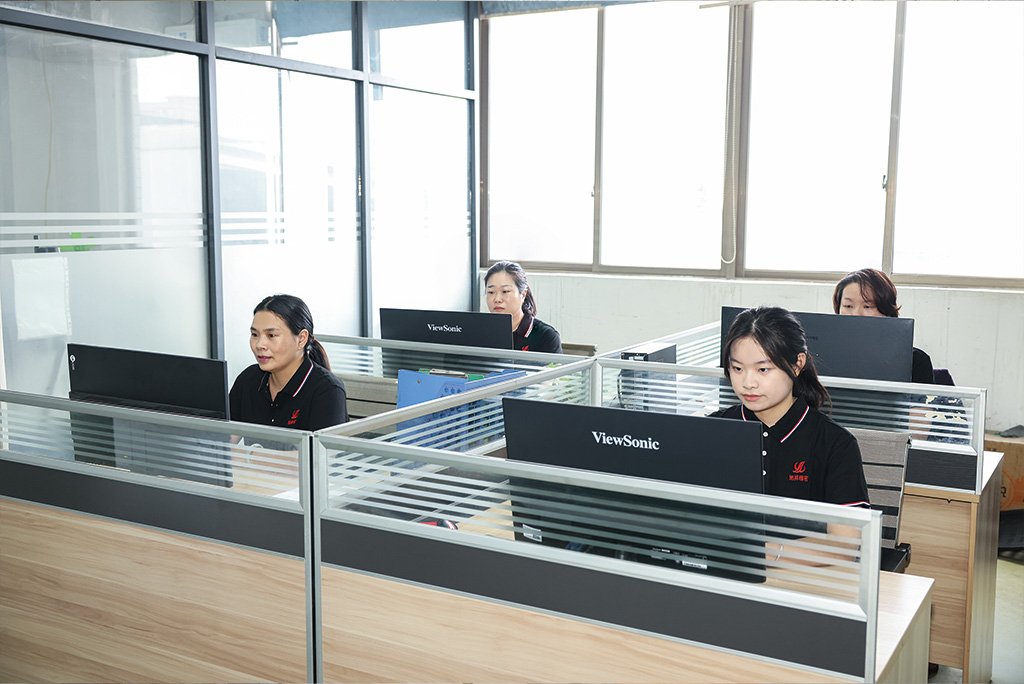
Typical work scope & customer-facing services (Rockwell hardness testing)
- Rockwell hardness verification on mold inserts, lifter / ejector components, wear plates, and selected raw blanks (scales applied per material and PO agreement).
- Post–heat-treatment confirmation that HRC bands on drawings and traveler notes were actually achieved—not assumed from a vendor’s generic cert.
- Receiving inspection support when you require hardness evidence tied to heat lot, furnace batch, or Xuxiang serial as defined in your SQE package.
- Early screening for under-temper, over-temper, or wrong material mix before nitride, chrome, wire, or expensive assembly steps consume the steel.
- Documentation suitable for material sections of PPAP / FAI when hardness is a control characteristic on your control plan.
- Complements CMM and optical data so your customer receives geometry plus metallurgical credibility in one supplier narrative.
Rockwell Hardness Tester — HR-150A
Metallurgical proof beside dimensional evidence
The Rockwell HR-150A answers the question CMM data cannot: did the heat-treatment story hold? For inserts and lifters where HRC bands protect wear life, hardness verification completes the package your customer’s material engineer expects to sign.
Closing the loop geometry alone cannot close
Shops proud of their CMM but indifferent to hardness invite premature galling mysteries that stain reputations. Pairing dimensional metrology with documented hardness conformance signals adult-quality-system thinking—the kind premium OEMs reward with expanded share.
If your incumbent supplier treats hardness as “supplier certificate only,” you are exposed. Xuxiang retains verification capability in-house so evidence travels with the lot, not with a hope-and-prayer PDF forwarded from a trading desk.
- Traceability pairing: geometry plus hardness—complete mechanical credibility.
- Risk insulation: catch heat-treat drift before chrome, wire, or customer assembly sees the part.
- PPAP harmony: one partner supplies both measurement narratives coherently.
CMM Inspection — ZEISS MICURA
German bridge CMM architecture for programs that audit microns in public
The ZEISS MICURA is the centerpiece buyers photograph when they need to believe your data. Active scanning strategies capture form variation faster than trivia point sampling, while preserving respect for your tightest true-position callouts—exactly the combination optics, medical, and high-density electronics demand.
The gap between “we have a CMM” and “we have a MICURA-class authority”
Many mold houses tick the CMM checkbox with aging bridge machines not maintained for modern scanning cadence or temperature discipline. ZEISS MICURA signals intentional investment in authoritative measurement—the instrument tier your quality director expects when release authority rides on a single report.
Positioned against suppliers who still debate microns with handheld tricks, Xuxiang offers repeatable, customer-presentable evidence. That posture converts RFQs into long engagements because trust compounds faster than discounting ever could.
- German metrology DNA: ZEISS—globally recognized in regulated industries.
- Scanning intelligence: shape and profile data that point clouds alone miss—fewer FA loop-backs.
- Strategic pairing: feeds back into grind, wire, and EDM strategies—the CMM is not an island.
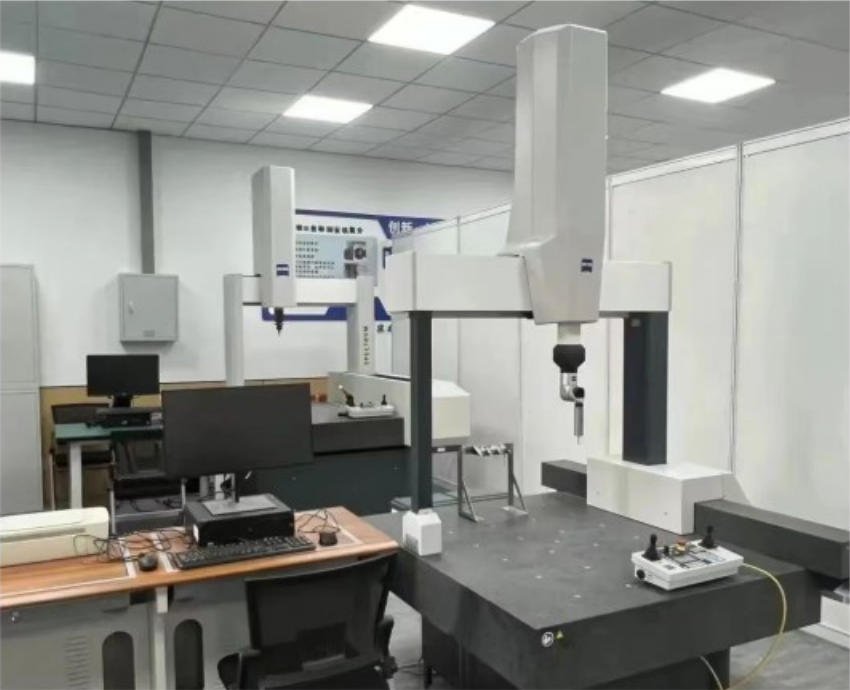
Typical work scope & customer-facing services (bridge CMM — ZEISS MICURA class)
- Programmed dimensional layouts with GD&T: true position, profile of surface / line, parallelism, perpendicularity, concentricity, runout—where drawing discipline demands numeric authority.
- First-article (FAI) qualification, capability studies, and gage R&R–supporting datasets sized to automotive and medical supplier norms (format agreed per program).
- High-density scanning of complex contours, free-form connectors, and optics- or medical-grade stacks where point-only sampling hides shape error.
- Lot acceptance and engineering-change verification: full layouts or targeted mini-studies after grind, wire, or EDM revisions.
- Feedback into manufacturing: CMM trends inform electrode adjustments, grind allowances, and wire cut offsets—measurement tied to corrective action, not shelf storage.
- Customer-reviewable reporting suitable for programs where release authority rides on a single metrology sign-off.
A Machine Park Built for Buyers Who Read the Footnotes
Equipment lists are easy to copy; integrated capability is not. Xuxiang’s advantage is the deliberate pairing of Japanese and Swiss EDM legacies, German CMM authority, Nikon optical depth, and production-scale grinding—under one engineering culture that routes jobs intelligently instead of whichever machine is free first.
Invitation to serious programs only
If your category rewards first-pass yields, audit transparency, and mature documentation, you already know cheap quotations age poorly. We invite you to compare our routing discipline and metrology narrative against any incumbent—and to let us prove on the next RFQ why equipment lineage plus accountability outperforms a discount that buys regret six months later.
Share drawings, material intent, annual volume, and your tightest tolerance islands. We will respond with a candid manufacturing map: where grinding earns margin, where Sodick and Charmilles defend your cosmetic story, where slow-wire replaces hand fitting, and where MICURA data becomes your release signature.
- Tier-one brands, not anonymous gray imports: names your QE can defend in a customer review, not hide in a sub-supplier chain.
- Redundant capacity where it hurts to wait: grinders and sinkers scaled for parallel programs, not romantic single-machine photos.
- Evidence stack, not promises: optical, height, hardness, and CMM form one traceable storyline.
xuxiangmold.com · Dongguan Xu Xiang Precision Mold Co., Ltd.