
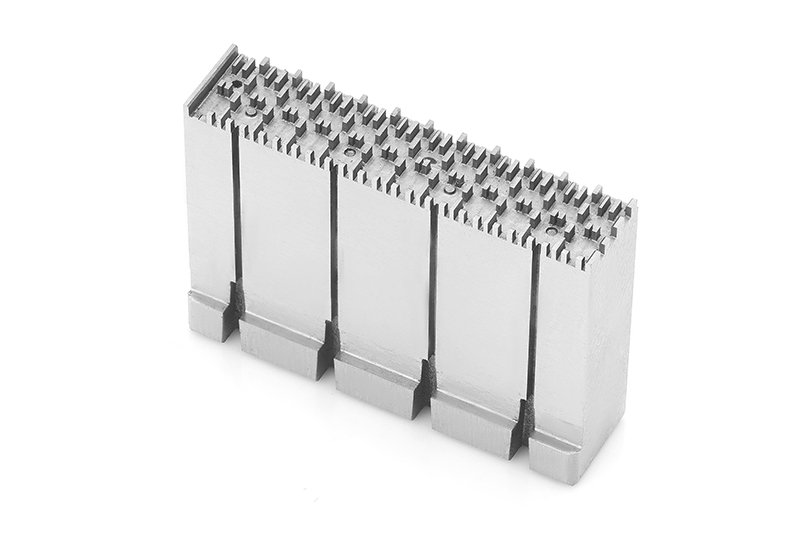
Plastic film parts · Precision mold insert
Board to Board, FPC, RF Mold Parts – Precision RF & High-Density Connector Components Board to board, FPC,RF mold parts
Brand Xuxiang Mold
Availability Made to drawing
RFQ pricing
Quote from STEP / PDF & quantity
Enhance the reliability and performance of your advanced electronics with these precision-engineered Board to Board, FPC, RF mold parts. Designed for high-density layouts, they support stable RF transmission and secure mechanical coupling in compact devices. Robust molding and tight tolerances help improve signal integrity while simplifying assembly. Ideal for manufacturers of communication modules, IoT devices, automotive electronics and consumer electronics. Build more compact, more reliable products without compromising RF performance.
(Board to board, FPC,RF mold parts)
- ISO 9001:2015–oriented process & documented inspection paths
- Zeiss / Nikon class metrology available for critical dimensions
- DFM feedback from 10+ senior tooling engineers
- Dongguan HQ + Quanzhou capacity for volume programs
Board to board, FPC,RF mold parts
Precision Board to Board, FPC, RF Mold Parts for Modern Electronics
These Board to Board, FPC, RF mold parts are engineered for manufacturers and OEMs who need dependable interconnect components for compact, high‑performance electronic systems. Combining board‑to‑board and FPC (Flexible Printed Circuit) mechanical interfaces with RF‑oriented molding features, they help you create highly integrated modules where space, signal integrity and durability are critical.
As devices become thinner, lighter and more connected, demand grows for miniaturized connectors and molded parts that can handle high‑frequency RF signals, repeated mating cycles and mechanical stress. These parts are designed to support that need, offering a stable physical structure around RF connectors, board‑to‑board mezzanine connectors, and FPC terminations so your design can maintain performance over the full life of the product.
Whether you build wireless communication modules, smart home devices, automotive control units, medical instrumentation or industrial IoT sensors, these parts provide the foundation for reliable RF paths and robust internal connectivity.
Key Features & Benefits
Every feature of these RF mold parts is focused on manufacturability, reliability and clean signal performance in space‑constrained environments.
- Optimized for RF Interconnects
Designed to support and protect RF connectors and transmission lines, helping maintain impedance control and minimize unwanted movement that can degrade RF performance. - Support for Board‑to‑Board and FPC Layouts
Suitable for vertical or parallel board‑to‑board stacking as well as rigid‑to‑flex FPC terminations, enabling flexible mechanical design and compact system architecture. - High‑Precision Molding
Tight dimensional tolerances help ensure accurate connector positioning, consistent contact pressure and reliable mating alignment on the production line. - Durable Materials
Engineered plastics and metals (where applicable) provide resistance to thermal cycling, vibration and handling during assembly and service, enhancing long‑term reliability. - High‑Density Layout Ready
Suitable for fine‑pitch board‑to‑board and FPC connector styles, supporting miniaturization without sacrificing mechanical strength or RF performance. - Production‑Friendly Design
Features such as alignment keys, mechanical support ribs and stable seating surfaces help reduce assembly errors and improve throughput on automated or semi‑automated lines.
Specifications & Key Attributes
The following table summarizes the typical characteristics and options available for these Board to Board, FPC, RF mold parts. Values are presented descriptively to guide component selection; exact details may vary by specific part number and customer design.
| Attribute | Description |
|---|---|
| Product type | Mechanical mold parts and housings for board‑to‑board, FPC and RF connector interfaces |
| Supported interconnect styles | Board‑to‑board mezzanine connectors, FPC/FFC connectors, RF coax or RF board‑edge interfaces |
| Typical applications | Wireless modules, IoT devices, smartphones, automotive electronics, industrial control and instrumentation |
| Material options | Engineering thermoplastics for insulation and housing; optional metal inserts or shields for mechanical reinforcement and RF grounding |
| Pitch & size compatibility | Suitable for fine‑pitch and micro‑miniature connector families commonly used in high‑density layouts |
| RF support | Form factors designed to stabilize RF connectors and routing, helping support consistent impedance and reduced mechanical stress on RF joints |
| Mounting & assembly | Designed for SMT or through‑hole connector mounting on PCBs; mold parts interface with standard SMT assembly and reflow processes where required |
| Environmental resistance | Materials selected for thermal stability and resistance to typical operating environments of consumer, industrial and automotive electronics |
| Customization | Custom shapes, mounting features, cut‑outs and branding possible based on project requirements and tooling |
| Compliance & testing | Can be designed to support relevant safety, reliability and RF performance test regimes as specified by the end application |
Typical Use Cases & Who It Is For
These Board to Board, FPC, RF mold parts are tailored for professional electronics design, manufacturing and assembly environments where high stability and clean RF performance are non‑negotiable.
- Wireless Communication Modules
Integrate with RF connectors, antennas and shielded sections on compact modules for Wi‑Fi, Bluetooth, cellular, GNSS and proprietary RF systems. - Consumer Electronics & Mobile Devices
Ideal for smartphones, tablets, wearables and multimedia devices that require tight board stacking and delicate FPC routing alongside RF circuits. - Automotive & Transportation Electronics
Support board‑to‑board and FPC connections in driver‑assist systems, infotainment units, telematics and vehicle networking hardware that must withstand vibration and temperature changes. - Industrial & IoT Equipment
Enhance the robustness of control units, sensor hubs and gateways where RF connectivity and mechanical stability are critical for long‑term field operation. - Medical & Test Instrumentation
Support precise, repeatable connections in compact test fixtures, portable diagnostic devices and monitoring equipment where signal fidelity is essential.
These components are particularly suited to design engineers, hardware architects, sourcing managers and contract manufacturers who are consolidating multiple functions on a small PCB footprint and need increased reliability around RF and fine‑pitch interconnects.
Selection & Buying Guidance
Choosing the right RF mold parts for your board‑to‑board and FPC design involves balancing mechanical, electrical and manufacturing constraints.
- Define the connector strategy first
Start by selecting the board‑to‑board, FPC and RF connector families you plan to use, including their pitch, orientation, stacking height and mating style. The mold parts can then be tailored to these geometries. - Assess mechanical constraints
Consider allowable board spacing, device thickness, keep‑out areas, screw positions and any required strain relief. Mold parts often double as structural supports or alignment guides between boards. - Consider RF performance
Ensure the molded structure does not interfere with RF traces or antennas. In some cases, integrated metal inserts or shields can help control EMI and improve RF consistency. - Plan for assembly and rework
Verify that the parts allow adequate access for placement, inspection and potential rework. Features such as chamfers, lead‑ins and clear visual alignment cues can reduce assembly time and errors. - Specify environment and lifetime
Clarify temperature range, expected vibration, number of mating cycles and handling conditions so material choices and design details match the target application.
Collaborating early with your connector and mold‑part supplier can shorten design cycles and avoid late‑stage mechanical or RF issues. Share PCB layouts, stack‑ups and RF routing diagrams so the mechanical design of the mold parts protects—not compromises—your signal integrity.
FAQ
Are these Board to Board, FPC, RF mold parts compatible with my existing connectors?
Compatibility depends on the specific connector families, pitches and orientations you use. In most cases, the mold parts can be matched or customized to common board‑to‑board, FPC and RF connector styles. Share your connector datasheets and PCB layouts so compatibility can be confirmed before ordering.
Can I use these parts in high‑frequency RF applications?
Yes, they are designed to support RF connectors and routing, provided your PCB layout and connector selection are suitable for the target frequency range. The mold parts help stabilize the physical interface, which is important for maintaining consistent RF performance.
What information do I need to provide to get the right mold parts?
For accurate selection or customization, it is helpful to provide:
- Connector part numbers and datasheets
- PCB mechanical drawings and stack‑up
- Target application and environment
- Any special RF, shielding or branding requirements
How should these parts be handled during assembly?
Handle the parts with standard ESD‑safe procedures and avoid excessive mechanical force on fine features or alignment structures. Follow your assembly line guidelines for pick‑and‑place or manual insertion, and ensure that PCBs are properly supported to prevent flexing during connector mating.
Do these mold parts require special cleaning or maintenance?
Once installed in a finished product, the mold parts typically require no maintenance. During assembly, keep them free of flux residues, dust and oils to ensure proper fit and function. If cleaning is necessary, use methods and solvents approved for the surrounding components and plastics.
Are custom designs or modifications available?
Yes, many projects use custom or semi‑custom mold designs to match specific connector combinations and mechanical envelopes. Tooling options can be discussed based on your expected volumes, design complexity and project timelines.
Can these mold parts be used in automotive or industrial environments?
They are suitable for use in demanding environments when designed with appropriate materials and tested against the relevant standards. Be sure to specify your temperature, vibration and lifetime requirements so the final design aligns with automotive or industrial expectations.
What is the typical lead time for production orders?
Lead time varies based on whether you use a standard design or a custom mold, as well as order quantity and current production load. Prototype samples usually ship faster, while full production may require additional time for tooling and validation.
What happens if my parts arrive damaged or do not fit as expected?
If any parts arrive damaged or do not match the agreed specifications, contact customer support with photos, batch details and your purchase information. Standard return, replacement or corrective‑action procedures will be applied according to the warranty and sales terms.
Same drawing, predictable results—next batch
Share revision, quantity ramp, and inspection level. We quote process route, ship date, and documentation in one structured response.