
Services · Progressive & stamping die tooling
Progressive Die Mold Components for Reliable Strip Progression and Punch Life
Teams searching for progressive die components and stamping die mold components are usually trying to protect the boring fundamentals: piloting, progression, cutting clearance, and wear behavior under real tonnage. Xuxiang machines die steel for OEM stampers and die shops—punches, die sections, stripper plates, pilots, guides, and repair-friendly inserts (as scoped)—with routing across CNC, wire and sinker EDM, grinding, and inspection aligned to your tryout gate.
If you are comparing suppliers, lead with strip layout risk: station-to-station relationships, burr and edge-break expectations, and the documentation your customer will review after first hit. Use Contact for a formal quote, or the mid-page inquiry button for a fast engineering pass on drawings.
What die buyers ask us to align before cutting steel
- Pilot and progression assumptions stated as measurable targets—not “match the sample” only
- Clearance strategy that matches material, thickness, and edge-quality class
- Inspection scope that matches tryout: pilots, critical forms, and interface seating
Why Progressive Dies Fail in the Gray Area Between “Drawing Tight” and “Press True”
Strip · pilots · progression stack-up
A progressive tool is a chain reaction. Small errors in pilot locations, progression length, or interface seating often show up late—as drag marks, edge break drift, or punch chatter that gets blamed on “press setup.” Strong RFQs for progressive die mold components usually answer:
- What must stay true across stations? (tie it to the strip layout, not generic tolerances)
- What edge quality class is required? (burr, shear, break—what your customer actually measures)
- What will you verify at tryout? (pilots, critical forms, strip lift, guide clearance)
Practical note for procurement
If you are comparing quotes, look for agreed critical characteristics and a measurement plan—not a single “high precision” line item hiding undefined scope.
Before award: align on these five inputs
- Revision-controlled 3D + 2D, units, and material or hardness assumptions
- Material type, thickness range, and grain direction rules when they affect forming
- Strip width, pitch, and pilot scheme references (or equivalent layout context)
- Clearance notes or supplier standards when you already own them
- Inspection template expectations (customer FAIR-like or internal)
Typical Scope for Progressive & Die Mold Components
Punches · dies · stripper stack · guides (as released)
Scope is always confirmed in quote, but teams often start here when they need stamping die components for production tooling:
Punches and punch assemblies
Cutting, forming, and secondary-detail punches with head treatments, retainers, and anti-rotation features defined for repeatable assembly after service.
Die sections, die plates, and inserts
Wear inserts, keyed sections, and repair-friendly strategies documented as assemblies—not a bag of loose pieces.
Stripper plates and pressure pads
Interface surfaces and guidance features coordinated to stripper travel, guide pins, and expected sheet behavior.
Pilots, bushings, and guide hardware (when in scope)
Fit classes and surface strategies coordinated to lubrication, coatings, and expected duty cycles.
Not sure if your RFQ fits?
Send STEP/IGES plus PDF and mark the top five risks (progression, burr, wear, seating, tryout evidence). We will return what we can take in-house and what needs clarification before award.
Metrology That Matches Tryout Reality
Pilots · progression · critical forms
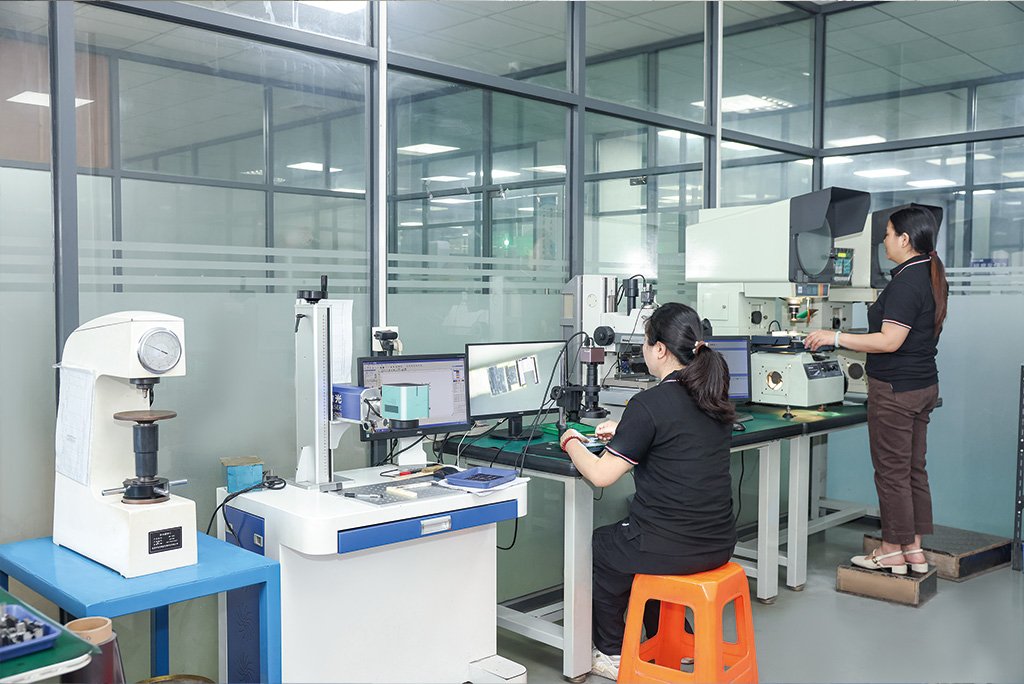
For die mold components, inspection should follow what your tryout team will actually defend: pilot diameters and locations, progression-related dimensions, seating surfaces that drive stack height, and form features that affect fit or springback.
- Optical and tactile methods suited to small features and tight access
- Focused layouts for top-risk characteristics when agreed upfront
- Clear revision linkage between measured results and drawing indices
Routing: CNC, Wire EDM, Grinding—Chosen for the Feature
Hardened detail · clearance surfaces · schedule
Stamping die components rarely follow one operation list. We choose sequences to protect cutting edges, manage thin webs, and finish interfaces where grind quality affects burr or galling risk.
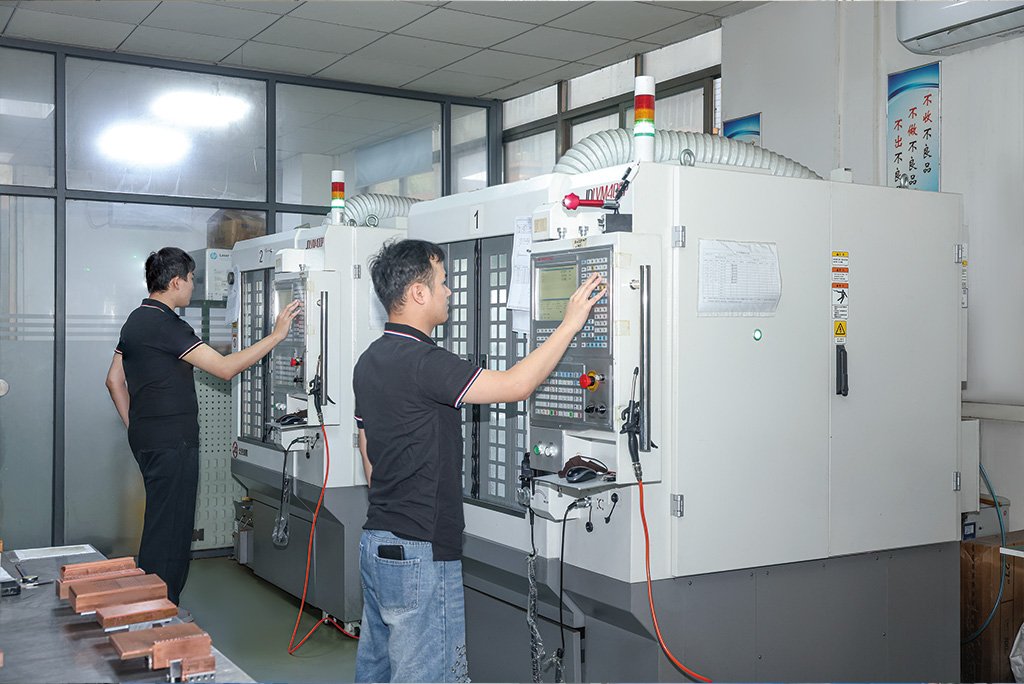
- Multi-axis CNC for roughing and semi-finish on die shoes and larger sections
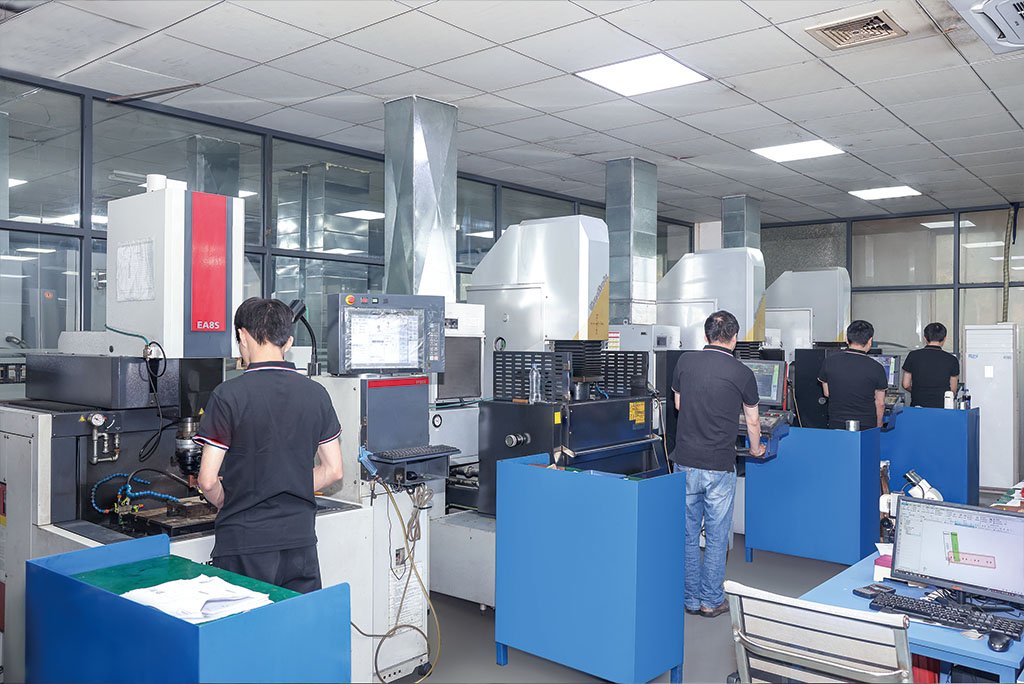
- Wire and sinker EDM for hardened punch profiles, tight radii, and deep detail
- Grinding for thickness control, parallel surfaces, and critical seating when specified

Schedule realism
- Long-lead punches can be staged on released critical profiles
- Heat-treat and wire schedules interact—call out dependencies early
- Engineering changes after hardening carry different risk—surface them in the RFQ
Materials and Treatments (Aligned to Wear and Impact)
Tool steels · carbide · coatings
What we commonly support
Air-hardening and oil-hardening tool steels, powder metallurgy grades for demanding wear, stainless paths when environment demands it, and carbide or steel-carbide strategies when the duty cycle justifies it—always tied to sheet material, thickness, and expected hits.
What to include in the RFQ
Target hardness, approved steel lists, coating or surface notes, and any customer restrictions. Missing context on material thickness range is a common reason quotes stall.



Certifications & quality systems
Documentation that supports die-shop claims
Die work still has to pass a quality gate. We operate under recognized management system frameworks and can bundle material traceability and dimensional reporting when your PO requires it. Certificate scope and registration particulars are supplied for vendor files on request.
ISO 9001:2015
Documented control of processes, changes, and corrective actions—so die component programs don’t drift between tryouts.
ISO 14001:2015
Environmental management practices aligned to manufacturing realities, waste handling, and continuous improvement.
ISO 45001:2018
Occupational health and safety management supporting disciplined shop-floor routines alongside precision machining.
Steel & heat-treat records
Certificates and treatment traceability released against revision-controlled drawings when your program demands it.
Inspection discipline
Layout plans tied to named critical characteristics—agreed in quote so reports match your FAIR or internal template.
Ask for the certificate package or customer-specific quality addendum in your RFQ—we route it with the same technical owner.
What customers say
Field notes from progressive die programs and repeat punch orders
Representative feedback from die designers, tryout leads, and buyers who care about first-hit behavior—not only unit price. Swipe on mobile or use the arrows.
How to RFQ Cleanly (What to Include)
Faster quotes · fewer scope gaps
- 3D + 2D with revision, units, and measurable tolerances on pilots, progression, and critical forms
- Material, thickness range, grain rules (if applicable), and edge-quality expectations
- Strip layout or station context when available (even a PDF snapshot helps)
- Target volumes, tryout timing, and spare-punch strategy if known
- Inspection level and documentation expectations when known
If you can add photos of burr, galling, or prior failure modes, we can prioritize the right steel features before cutting.
What speeds a grounded response
- Clearance standard references or supplier rules when you already use them
- Press tonnage class and guide pin scheme when it affects interfaces
- Transfer history: what failed last time and why it mattered in tryout
Export or customer templates: share early so reporting scope matches your gate.
Xuxiang Manufacturing Services
Internal links · same structure as the site menu
Progressive & die mold components sit alongside injection mold tooling and broader machining capabilities. Use the manufacturing services hub or jump to a landing page below.
Mold tooling & components
Inserts, plates, standards—die-focused cluster on this page.
- Injection mold components & plates
- Precision mold components
- Progressive & die mold components You are here
- Standard mold components
- PCS mold components
Machining
CNC, Swiss, and general precision metal removal.
Injection molding & parts
Molded plastics—not cavity steel—for part & program RFQs.
Industries
Application-led molding discovery.
OEM metal parts
BOM-level machined metal for industrial equipment.
Quality & export
Documentation, ISO language, and overseas buyer support.
Why Teams Choose Xuxiang for Progressive & Die Mold Components
We treat progressive die mold components as press tooling—not generic machined blocks. Routing, heat-treat awareness, and inspection scope are discussed with your real tryout risks and customer gates in mind.
Invitation
Send drawings with revisions and critical characteristics called out. We will return scope you can compare fairly: operations, risks, and evidence—not a blind line price.
- Engineering-first review: progression, pilots, and clearance risks surfaced early
- Metrology alignment: reporting matched to your template when requested
- Schedule language: staged release options for long-lead punches
xuxiangmold.com · Dongguan Xu Xiang Precision Mold Co., Ltd.
Frequently Asked Questions (FAQ)
Common questions about progressive die components, stamping die scope, and how we work with die shops and OEM stampers.
Q:What counts as a progressive or die mold component?
A: Typically punches, die blocks or sections, stripper plates, pilots, guides, and wear inserts used in progressive or stamping dies—produced to agreed critical dimensions and material specifications.
Q:What drawings do you need for a quote?
A: 3D plus 2D with revision, units, material and hardness assumptions, critical dimensions tied to pilots/progression/forms, and strip layout context when available.
Q:Do you provide inspection reports?
A: Yes—layout scope is agreed in the quote (for example focused characteristics vs. broader layouts) so documentation matches your internal gate and customer expectations.
Q:How does this differ from general CNC machining?
A: Die programs emphasize hardened detail, EDM for punch profiles, clearance-driven geometry, and evidence plans tied to tryout—not only removing metal from a block.
Q:Can you follow our die shop standards and labeling?
A: Yes—share naming, labeling, and critical maps early. Aligning to your assembly rules reduces bench time and protects repeatability after service.