
Services · Bar-fed turning, backworking & micro milled detail
Swiss CNC Precision Machining for Slender, Production-Grade Bar Parts
Swiss CNC machining is where length-to-diameter ratio, guide strategy, and cutoff behavior decide whether your micro-features survive in volume—not whether someone owns a “Swiss” badge. Xuxiang runs bar-fed programs where L/D assumptions, cross-hole access, and burr-sensitive bands are agreed before first article.
For cross-cutting precision discipline, see precision machining services. For prismatic plates and housings, use CNC precision machining. Formal quotes: Contact.
What Swiss buyers ask us to lock before bar feeds
- Finished length, cutoff location, and what must stay supported through last ops
- Cross-drills, flats, and slots where burr direction affects assembly or seals
- Sampling emphasis for diameters you measure with air or tactile gages

Guide Strategy and L/D Ratio Are the Swiss “Tolerance Story”
Support · chatter · cutoff whiplash
Slender parts fail receiving when the quote assumed infinite stiffness. Strong RFQs name the unsupported span after guide release, the features that must stay coaxial through backworking, and any cosmetic bands that cannot survive aggressive part-off.
- What is the maximum stick-out after the guide lets go?
- Which diameters are true position–critical vs. cosmetic?
- Do cross-holes break into bores where burrs become functional defects?
Procurement note
If a Swiss quote ignores L/D, you are not comparing shops—you are comparing optimism. Ask where support ends and what changes if you tighten tolerances one band.
Kickoff checklist
- Bar diameter tolerance band and material grade with equivalents if allowed
- 3D + 2D with revision—especially cross-sections through slender stacks
- Downstream finishing (passivate, plate) with size impact on diameters
Typical Scope for Swiss CNC Precision Machining
Pins · shafts · connectors · sensor hardware (as released)
Envelope is always confirmed in quote, but teams often start here for bar-fed production hardware:
Precision pins and shafts
Diameter stacks, undercuts, and lead-in chamfers where concentricity and runout interact with guide release timing.
Connector and sensor bodies
Cross-holes, flats, and light milled pockets on small diameters where burr control and access drive acceptance.
Hybrid turn-mill features
Axial and radial features sequenced to protect seal bands and bearing surfaces through cutoff and handling.
Secondary ops after Swiss
When a feature truly needs bench deburr, laser mark, or a short grind step—called out explicitly so the Swiss program does not pretend to do impossible work.
Wrong lane?
Large prismatic housings usually belong on CNC precision machining. Send one RFQ if you are unsure—we will recommend the cleaner path.
Small-Feature Metrology That Matches Swiss Risk
Sampling · gage repeatability · cosmetic bands
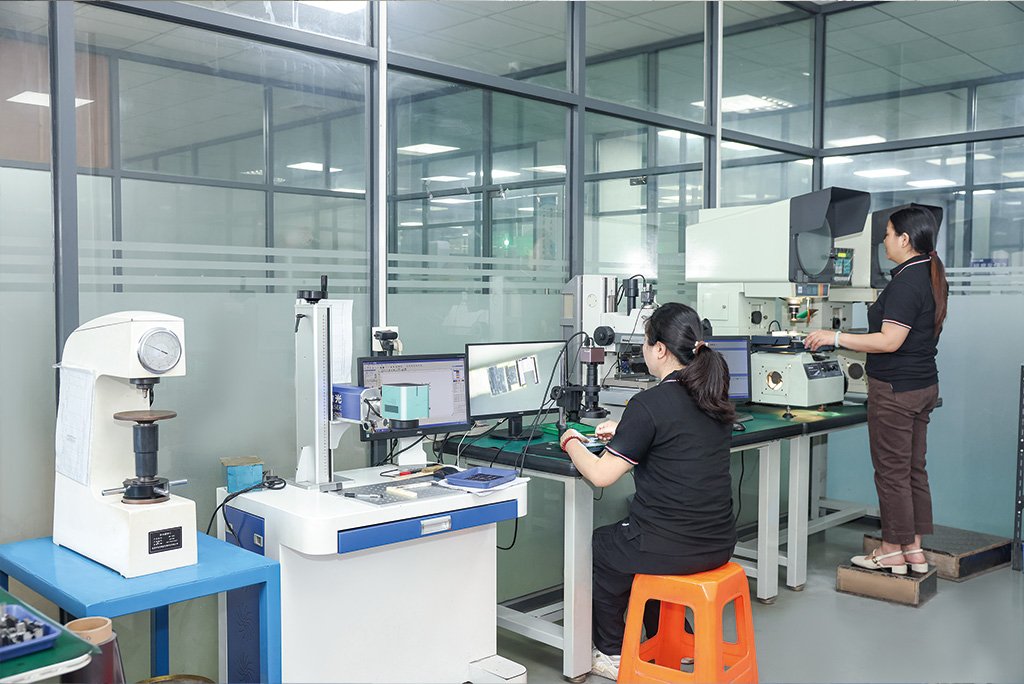
Swiss parts often fail on diameters buyers measure with two-point checks while the shop optimized for something else. We align evidence to agreed characteristics and realistic access—especially on cross-holes and thin walls where deflection is part of the measurement story.
- Focused layouts for pilot builds; expanded sampling when your gate demands it
- Notes when a feature is better validated in assembly or with functional gages
- Revision-controlled reports tied to drawing indices
Routing: Turning, Backworking, Milled Detail—and Honest Handoffs
Sequence · burr control · part-off
Swiss CNC programs win when the sequence protects what you measure last: live tooling order, backworking depth, and whether cutoff leaves a witness that your cosmetic note forbids.
- Axial rough/finish splits that protect bearing surfaces from chatter scarring
- Cross-hole sequencing that aims burr direction away from seal interfaces
- Secondary grind, EDM, or bench steps when tolerance class exceeds stable Swiss windows
Schedule realism
- Bar changeovers and rest length economics can dominate unit cost—share volume outlook
- First-article burr iteration may differ from steady-state cycle claims
- Passivation and coating shrink diameters—surface that before locking limits
Bar Stock, Grades, and Diameter Discipline
Straightness · ovality · material behavior in slender cuts
What we commonly support
Free-machining and structural grades in small diameters when approved—selected with attention to chip shape, springback, and how the alloy behaves in interrupted cuts.
What to include in the RFQ
Approved lists, equivalent rules, centerless grind requirements, and any restrictions on oils or residues before plating or adhesive assembly.


Certifications & quality systems
Documentation that supports OEM vendor files
Swiss CNC programs still pass your quality gate. We operate under recognized management system frameworks and can bundle material traceability and dimensional reporting when your PO requires it. Certificate scope and registration particulars are supplied for vendor files on request.
ISO 9001:2015
Documented control of processes, changes, and corrective actions—so bar-fed programs and tool life assumptions do not drift between lots.
ISO 14001:2015
Environmental management practices aligned to manufacturing realities, waste handling, and continuous improvement.
ISO 45001:2018
Occupational health and safety management supporting disciplined shop-floor routines alongside Swiss-type production.
Material records
Certificates and traceability released against revision-controlled drawings when your program demands it.
Inspection discipline
Layout plans tied to named critical characteristics—agreed in quote so reports match your FAIR or internal template.
Ask for the certificate package or customer-specific quality addendum in your RFQ—we route it with the same technical owner.
What customers say
Field notes from OEM Swiss and bar-fed programs
Representative feedback from buyers who care about L/D honesty and burr discipline—not only cycle time claims. Swipe on mobile or use the arrows.
How to RFQ Swiss CNC Precision Machining
Faster quotes · fewer hidden bar assumptions
- 3D + 2D with revision, units, and tolerances on diameters, runout, and true position stacks
- Bar diameter, material grade, finished length, and max unsupported span after guide release
- Cross-holes, flats, slots, and notes on burr direction relative to seals or threads
- Annual volume outlook and whether first article burr iteration is expected
- Balloon map or gage method notes when you measure with air, rings, or functional checks
Photos of part-off defects or prior handling damage help us sequence cutoff and packaging before pilot builds.
What speeds a grounded Swiss response
- Cosmetic bands that cannot tolerate witness marks or heavy chamfers
- Plating or passivate thickness assumptions that shrink press-fit diameters
- Packaging rules when slender parts cannot flex in shipment
Share customer templates early so evidence matches your gate.
Xuxiang Manufacturing Services
Internal links · same structure as the site menu
This Swiss CNC machining page focuses on bar-fed slender turn-mill work alongside precision machining services and CNC precision machining for prismatic hardware. Use the manufacturing services hub or jump to a landing page below.
Mold tooling & components
Cavity steel, plates, and standards—see dedicated mold landing pages.
Machining
CNC, Swiss, and general precision metal removal.
- Precision machining services
- CNC precision machining
- Swiss CNC machining You are here
Injection molding & parts
Molded plastics—not cavity steel—for part & program RFQs.
Industries
Application-led molding discovery.
OEM metal parts
BOM-level machined metal for industrial equipment.
Quality & export
Documentation, ISO language, and overseas buyer support.
Why Teams Choose Xuxiang for Swiss CNC Machining
We treat Swiss CNC machining as a bar-fed engineering program: L/D, burr risk, and cutoff behavior are discussed before the first bar loads—so quotes compare fairly and slender parts survive receiving.
Invitation
Send drawings with bar diameter, finished length, and the top five risks (runout, cross-holes, part-off, plating shrink, packaging). We will return scope you can defend: sequence, support assumptions, and evidence—not a blind cycle-time price.
- Bar discipline: straightness and ovality assumptions tied to real guide strategy
- Burr-aware sequencing: tooling order aligned to assembly-sensitive interfaces
- Lane honesty: prismatic CNC recommended when the geometry outgrows bar support
xuxiangmold.com · Dongguan Xu Xiang Precision Mold Co., Ltd.
Frequently Asked Questions (FAQ)
Common questions about Swiss CNC machining, bar-fed scope, and how we work with OEM buyers.
Q:When is Swiss CNC the right lane versus prismatic CNC?
A: When the dominant geometry is long and slender from bar, with rotational features, cross-holes, or light milled flats where guide-bushing support beats conventional chuck-and-stick-out risk.
Q:What bar stock and L/D information do you need in the RFQ?
A: Nominal diameter, material grade, finished length, unsupported span after cutoff, and any features that must remain coaxial through backworking—so guide strategy and deflection risk are quoted honestly.
Q:Can you combine turning, milling, and secondary ops in one program?
A: Yes—when access, burr risk, and inspection emphasis are explicit so the sequence protects critical fits and cosmetic bands through cutoff and any downstream finishing.
Q:How does Swiss relate to the precision hub and CNC pages?
A: The precision page describes cross-cutting discipline; the CNC page is prismatic-led; this page is bar-fed Swiss-led. Send one RFQ and we will recommend the lane if geometry spans both worlds.
Q:Do you provide inspection reports for Swiss parts?
A: Yes—layout scope is agreed in the quote (focused diameters vs. broader characteristics) so documentation matches your internal gate and gage methods.