
OEM metal · Heavy & precision metal parts machining
Large-Envelope CNC for Heavy Metal Work—Roughing Discipline, Fixture Truth, and Honest Lane Routing
Some parts fail because the drawing is vague. Others fail because the machine is fighting physics: chatter during deep roughing, warp after stress relief, or a fixture that looked fine in CAD but moved under load. This lane is for heavy and precision metal parts machining where envelope, stock removal, and workholding are the headline risks—still finished to agreed criticals when the print demands it.
For BOM hardware where tight bores, seals, and FAIR-style characteristics dominate, start with precision machined components for industrial OEM. For general machining discovery, open precision machining services. Quotes: Contact.
What we align before chips fly on heavy work
- Stock size, mass handling, and safe lifting assumptions
- Roughing versus semi-finish passes tied to distortion risk
- True critical dimensions versus “machine everything perfect” fantasy
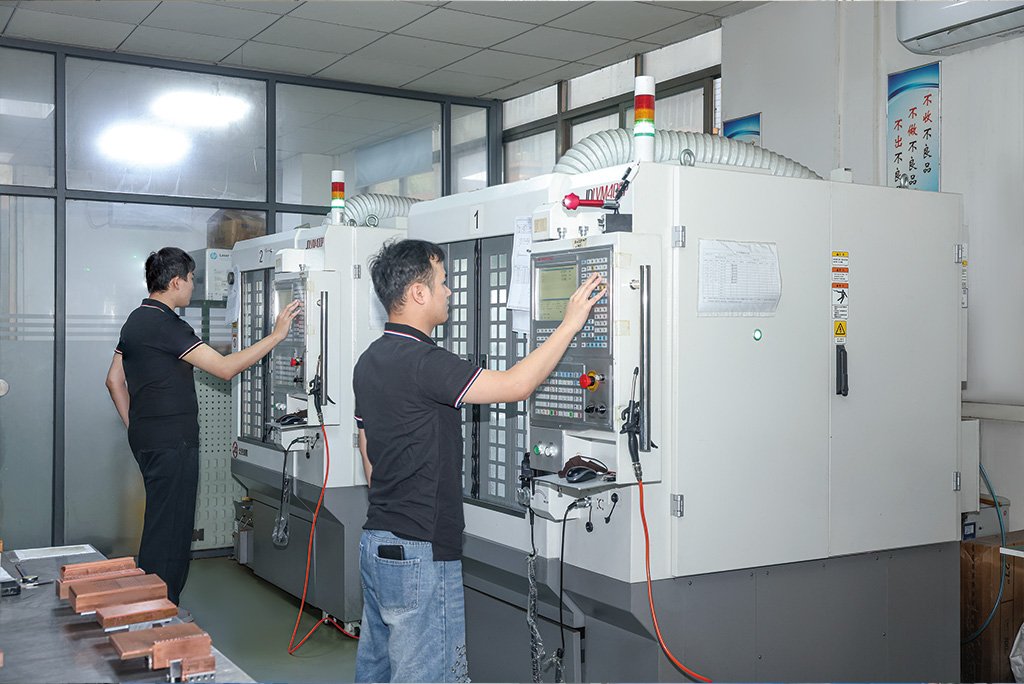
Envelope, Roughing, and Semi-Finish: Where Heavy Parts Win or Warp
Stock removal · heat · chatter · staged releases
Large plates and blocks do not behave like small lathe work. Roughing sets internal stress in motion; semi-finish reveals whether your datum strategy survives reality. We quote passes, rest material, and inspection checkpoints that match how the part actually moves on the table.
- What is the minimum stock that still respects lifting and handling?
- Where should roughing stop to protect thin webs or long overhangs?
- When does stress relief or normalize belong inside the route—not as an afterthought?
Procurement note
If a quote treats a 200 mm plate like a Swiss pin, you are not comparing processes—you are comparing fiction. Ask how roughing time, tool life, and distortion risk are bounded.
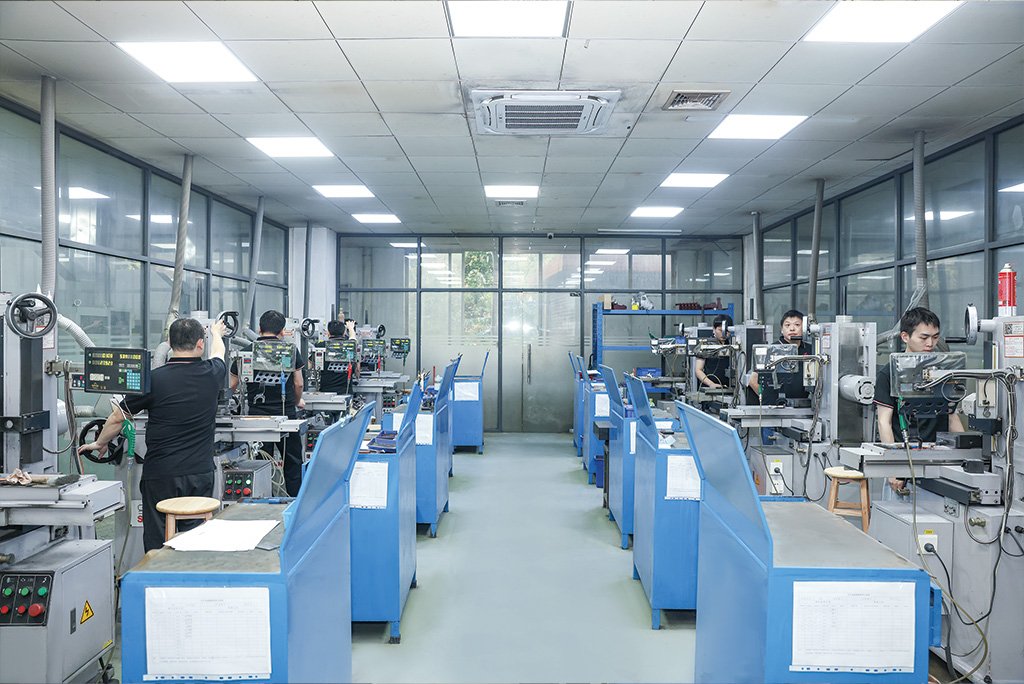
Kickoff checklist
- 3D + 2D with revision, units, mass or stock envelope, and datum intent
- Material grade, stock condition, and approved equivalent rules
- Crane, fork, or table constraints that change setup options
Fixturing Honesty: Holding Heavy Metal Without Pretending It Is Rigid
Clamping · datum repeatability · chatter control
The best CAM file loses to a setup that flexes. Heavy machining quotes should name how the part is held for each op, what features are sacrificed to clearance, and where repeatability could drift between rough and finish.
- Primary and secondary datums tied to functional assembly—not only programmer convenience
- Soft jaw, modular fixture, or dedicated plate assumptions stated explicitly
- Tool reach limits that force staged flips or extra ops called out early

Two Lanes, One Supplier: Heavy Machining vs OEM Precision Components
Honest routing instead of forcing every RFQ into the same template
We would rather say wrong lane early than burn calendar pretending a frame program is a Swiss turning exercise—or the reverse.
Stay on heavy & metal machining when…
Large stock, deep pockets, long reach, plate-style work, weldment prep, or lifting and fixture complexity dominate the technical story—even if a few tight features still matter.
Move to OEM precision components when…
The argument is primarily assembly-critical bores, sealing faces, cosmetic discipline, and documentation matched to a tight receiving template on smaller BOM hardware.
Practical split
- Heavy lane prioritizes removal rate stability, setup realism, and staged release
- OEM lane prioritizes characteristic control, deburr language, and FAIR-style evidence
- One RFQ is fine—tell us the top risks and we recommend the lane
Cross-link
Open precision machined components for industrial OEM when the BOM conversation is about tight tolerances and repeatability on mechanism hardware.
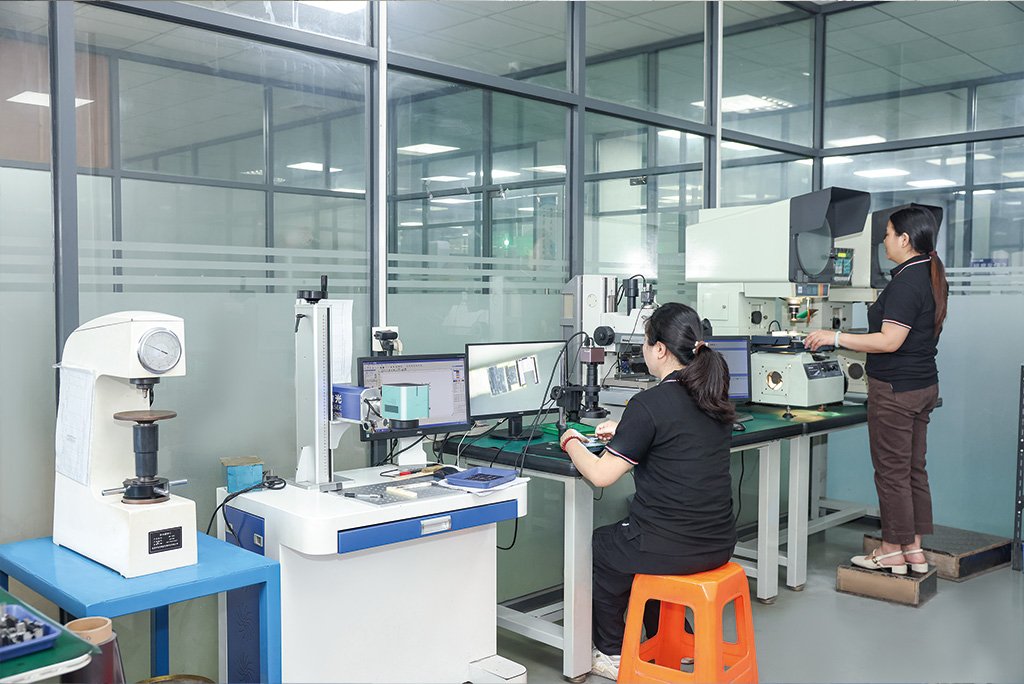
Metrology on Large Parts: Evidence Where Reach and Flex Still Matter
Layout · sampling · functional checks
Heavy parts flex under their own weight on the CMM table. We align layouts to measurable surfaces and agreed sampling—especially after roughing moves stress and semi-finish re-establishes datums.
- Balloon maps welcomed so inspection matches the same criticals as machining
- Thread, depth, and flatness notes when gage method matters to your stack-up
- Revision-controlled reporting tied to drawing indices
Schedule realism
- Stress relief can reorder flatness buy-off—call heat timing before locking FA dates
- Long roughing cycles may justify staged dimensional releases when agreed
- Coating and mask steps after heavy removal can change rework boundaries—note them early
Materials, Stock Condition, and Environmental Assumptions
Steel · stainless · aluminum · coatings
What we commonly support
Industrial alloys for heavy structural and mechanism hardware when grades are approved—selected with attention to machinability, distortion after roughing, and coating compatibility as your drawing states.
What to include in the RFQ
Approved lists, equivalent rules, RoHS or environmental notes, rust preventative restrictions, and packaging that must protect freshly machined sealing faces.
Certifications & quality systems
Documentation that supports vendor files on heavy programs
Heavy metal machining still has to pass your gate. We operate under recognized management frameworks and can bundle material traceability and dimensional reporting when your PO requires it. Certificate scope and registration particulars are supplied for vendor files on request.
ISO 9001:2015
Documented control of processes, changes, and corrective actions—so roughing routes, fixture revisions, and ECNs do not drift between lots.
ISO 14001:2015
Environmental management practices aligned to manufacturing realities, waste handling, and continuous improvement.
ISO 45001:2018
Occupational health and safety management supporting disciplined shop-floor routines alongside large-part lifting and machining.
Material records
Certificates and traceability released against revision-controlled part data when your program demands it.
Inspection discipline
Layout plans tied to named critical characteristics—agreed in quote so reports match your FAIR or internal template.
Ask for the certificate package or customer-specific quality addendum in your RFQ—we route it with the same technical owner.
What customers say
Field notes from heavy machining and large-envelope programs
Representative feedback from buyers who care about fixture honesty and schedule realism—not only unit price. Swipe on mobile or use the arrows.
How to RFQ Heavy & Precision Metal Parts Machining
Faster quotes · fewer hidden roughing assumptions
- 3D + 2D with revision, units, stock envelope or mass, and datum intent
- Material grade, stock condition, heat treat or coating notes, and equivalent rules
- Lifting, crane, fork, and table constraints that affect setups
- True critical dimensions versus informational geometry
- Annual volume outlook and whether pilot sampling differs from production intent
Photos of prior warp, chatter, or handling damage help us align roughing and fixture risk before first article.
What speeds a grounded heavy machining response
- Assembly references that explain which faces must stay clean for seals or bearings
- Packaging and blocking requirements when large parts scratch easily
- Customer inspection templates or balloon maps when you already know your gate
Share templates early so evidence matches your receiving reality.
Xuxiang Manufacturing Services
Internal links · same structure as the site menu
This page focuses on heavy & precision metal parts machining—alongside tooling, molding, and specialty lanes. Use the manufacturing services hub or jump to a landing page below.
Mold tooling & components
Cavity steel, plates, and standards—see dedicated mold landing pages.
Machining
CNC, Swiss, and general precision metal removal.
Injection molding & parts
Molded plastics—not cavity steel—for part & program RFQs.
Industries
Application-led molding discovery.
OEM metal parts
BOM-level machined metal for industrial equipment.
- Precision machined components (OEM)
- Heavy & metal machining You are here
Quality & export
Documentation, ISO language, and overseas buyer support.
Why Teams Choose Xuxiang for Heavy & Precision Metal Machining
We treat heavy metal programs like engineering projects: roughing, fixturing, and distortion risk are discussed with the same honesty your shop floor enforces on the table.
Invitation
Send part data with revisions and the top five risks (envelope, lifting, chatter, warp, coating timing). We will return scope you can compare fairly: process plan, setup intent, and evidence—not a blind unit price.
- Fixture clarity: how the part is held per op, including reach and flip truth
- Roughing discipline: staged removal tied to stress and flatness reality
- Lane honesty: OEM precision lane when the BOM argument is characteristic control
xuxiangmold.com · Dongguan Xu Xiang Precision Mold Co., Ltd.
Frequently Asked Questions (FAQ)
Common questions about heavy machining, envelope, lane routing, and how we work with industrial buyers.
Q:What heavy and large-envelope metal machining do you support on CNC?
A: Programs where roughing volume, plate or block size, long reach, and fixture rigidity are the primary constraints—staged rough, stress-relief or normalize when agreed, then semi-finish and finish passes aligned to the print’s critical characteristics.
Q:When should we route RFQs to heavy machining instead of the OEM precision components lane?
A: When the part is dominated by large stock removal, heavy plate or bar, deep pockets, long tool reach, or lifting and workholding complexity, use the heavy lane. When the argument is mostly tight bores, sealing faces, and FAIR-style characteristics on smaller hardware, the OEM precision lane is usually cleaner.
Q:What should a heavy machining RFQ include for a grounded quote?
A: Mass estimate or stock size, lifting and handling constraints, datum and fixture assumptions, material grade and stock condition, heat treat timing, target tolerances on true criticals, and photos of similar parts or prior warp or chatter issues.
Q:How do you control distortion and stress after aggressive roughing?
A: We stage roughing, semi-finish, and finish with agreed rest material and—when your spec allows—stress relief or normalize in the route. The goal is predictable flatness and datum repeatability, not chasing a single magic pass.
Q:Can inspection evidence still match FAIR-style layouts on large parts?
A: Yes—share balloon maps and gage methods early so reporting matches the same characteristics agreed in the quote, including how flexible features are supported during measurement.